Comparison Trap: How to Stop Measuring Your Life Against Everyone Else's
Constant comparison with other people's highlights drains contentment and distorts your sense of progress....

Aristotle taught on his feet. His pupils followed him around the covered walk of the Lyceum, arguing as they went, and the school that grew out of those sessions took its name from the habit: the Peripatetics, from peripatein, to walk about. The point was never that walking made the teaching more pleasant. It was that thinking and moving belonged together.
Most of us have separated the two. Thought now happens at a desk, under a lamp, with a screen open and a deadline attached. Walking is what we do when the work is finished, or when we have given up on finishing it. The older habit is worth recovering, and not out of nostalgia. A daily wander is one of the few dependable ways to get your mind out of its own way.
Ancient philosophy was largely conducted outdoors and in motion. Socrates buttonholed people in the marketplace. The Stoics taught in the colonnades, which is what stoa means. Aristotle's followers were so associated with walking that the name stuck for centuries.
There is a practical reason this endured. A conversation held while walking has a different quality from one held across a table. Nobody can hold a fixed stare. Silences are easier. Ideas arrive in fragments and get tested out loud. If you have ever had a difficult subject to discuss with a friend or a colleague, you already know that the walk version goes better.
The habit never died, it merely became personal rather than institutional. A short roll call:
None of these people walked for fitness. They walked because the work required it: a mind that moves through the world tends to produce a different kind of thought from a mind fixed in a chair.
Nobody can give you a tidy mechanism, because there probably isn't one. But the observable effects are consistent. Walking sets up a rhythm, and rhythm settles the body without occupying the whole of your attention. You have enough spare capacity to think, and not quite enough to spiral.
Something else happens too. When you sit still and try to solve a problem, you tend to circle the same few options. When you walk, the scenery keeps changing — a gate, a dog, a bit of roof — and each small interruption nudges your thinking off its rut. You come back to the problem from a slightly different angle, often without noticing the shift.
There is also the relief of having no task. Walking has a purpose, but nothing to achieve. That gap is where associative thinking lives: the loose, wandering, connecting sort of thought that churns out ideas you would never reach by staring harder.
Attention restoration theory, developed by Rachel and Stephen Kaplan, proposes that natural environments let "directed attention" recover, because nature holds your interest gently rather than demanding it. That fits most people's experience of a park or a canal path. General research on walking consistently points in the direction of lifted mood and clearer attention, particularly outdoors. The honest summary is that the effects are real but modest, and vary a great deal between individuals. A walk is not a treatment for a clinical condition. If low mood or anxiety has been with you for weeks, speak to your GP.
What the evidence does not support is the idea that every walk must be long, hard or in beautiful countryside. A short loop around familiar streets does a job that a treadmill in a basement does less well. Green space helps. Repetition helps more.
The difference between a walk that clears your head and a walk that yields something is usually one small decision: you take a question with you.
Pick a single, genuinely open question before you leave — not a to-do item, but something that has been sitting unresolved. How do I handle this conversation? What am I actually avoiding here? Is this project still worth the time? Then walk. Do not force an answer. Let the question sit in the background and turn it over when it surfaces. Roughly once every ten walks something useful will float up, often in the last five minutes, often while you are thinking about something else entirely.
Carry paper, not a phone. A phone invites you to fill every pause, which is the opposite of what you came for.
Here is a routine that survives bad weather and busy weeks:
You do not need a philosophy, or a copy of Aristotle, or a route in the hills. You need a door, ten minutes, and one question you have been carrying around without quite looking at it. Go out. Walk at a pace that lets you notice things. Come back and write down whatever turned up.
Do that most days for a month and you will have a habit that costs nothing, requires no equipment, and quietly does more for your thinking than another hour at the desk ever will.
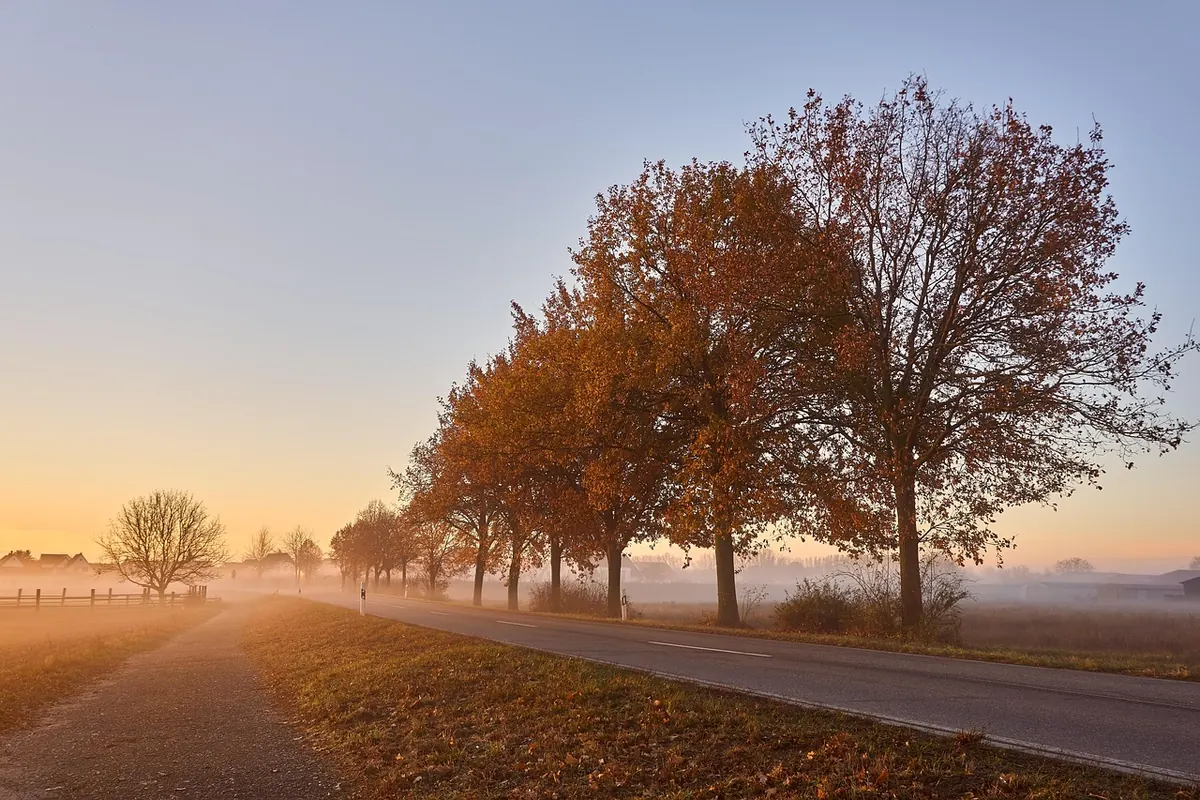
Photo: distelAPPArath / Pixabay
Constant comparison with other people's highlights drains contentment and distorts your sense of progress....
Regret is information, not a verdict. A practical process for limiting the damage, extracting the right...
Intuition and evidence each fail under predictable conditions. A ten-point checklist for knowing when your...